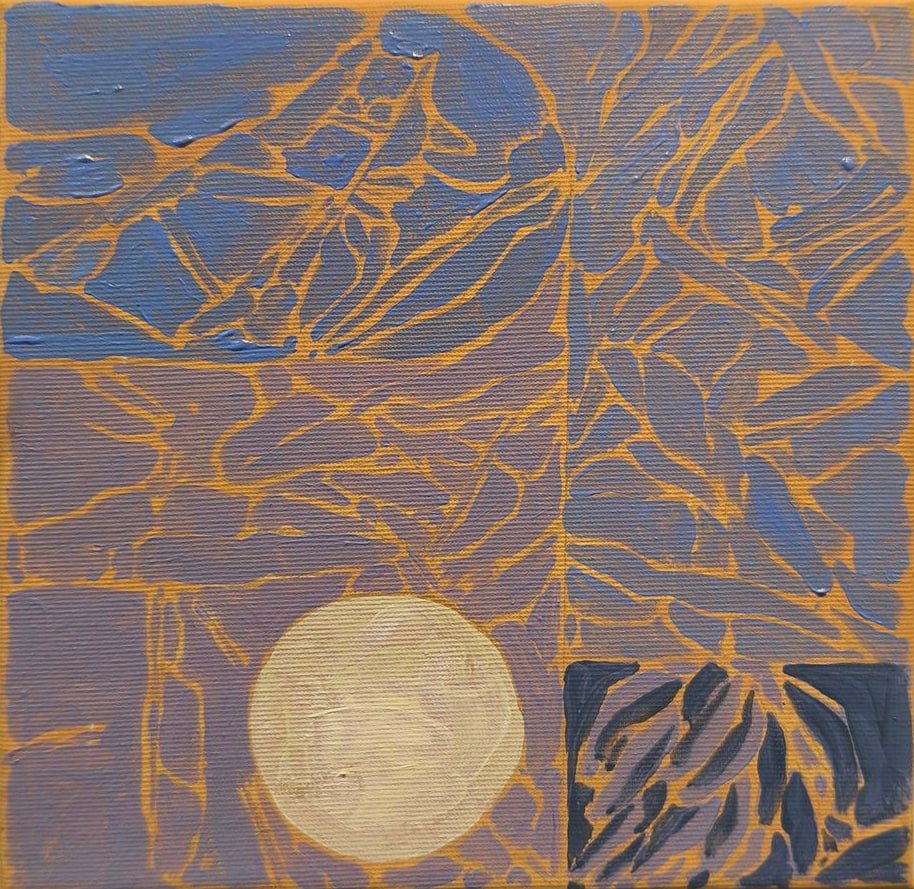
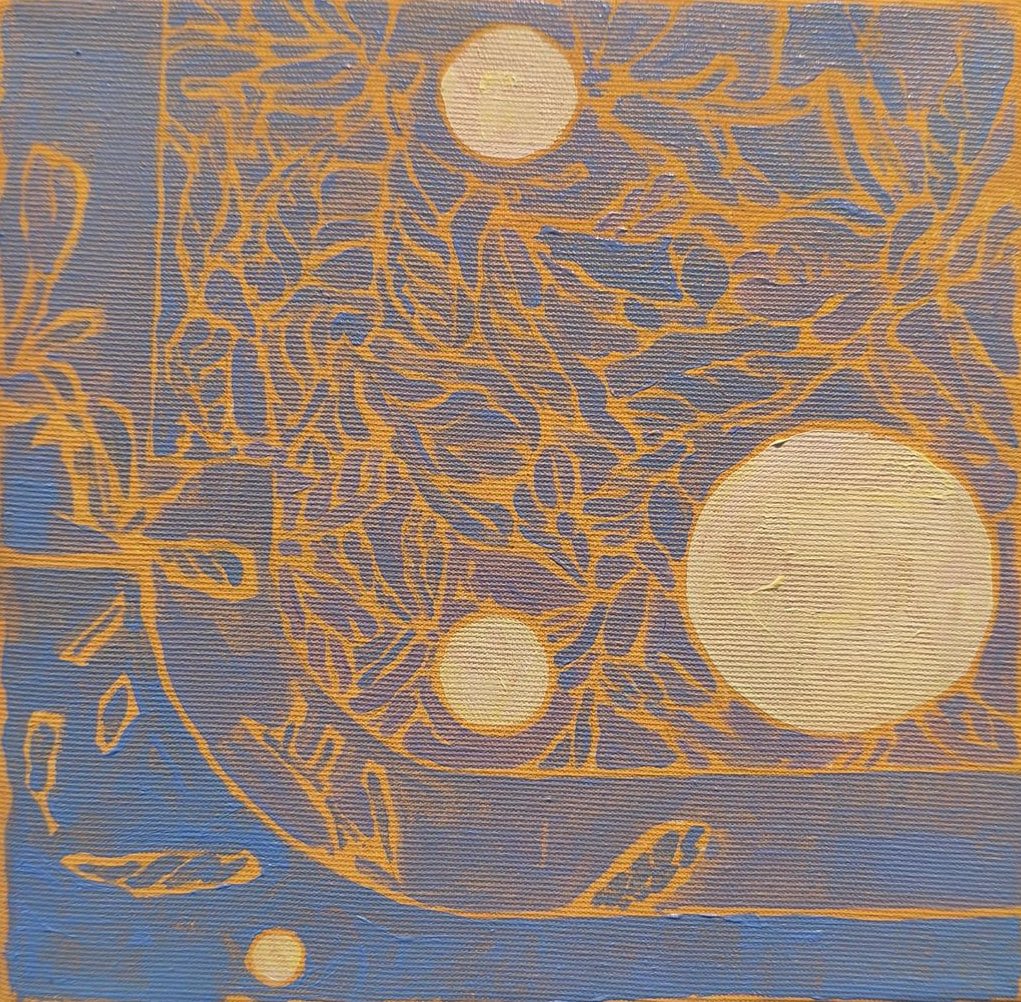
On view
Trópico de primavera em anomia
Curatorial text
João Laporte
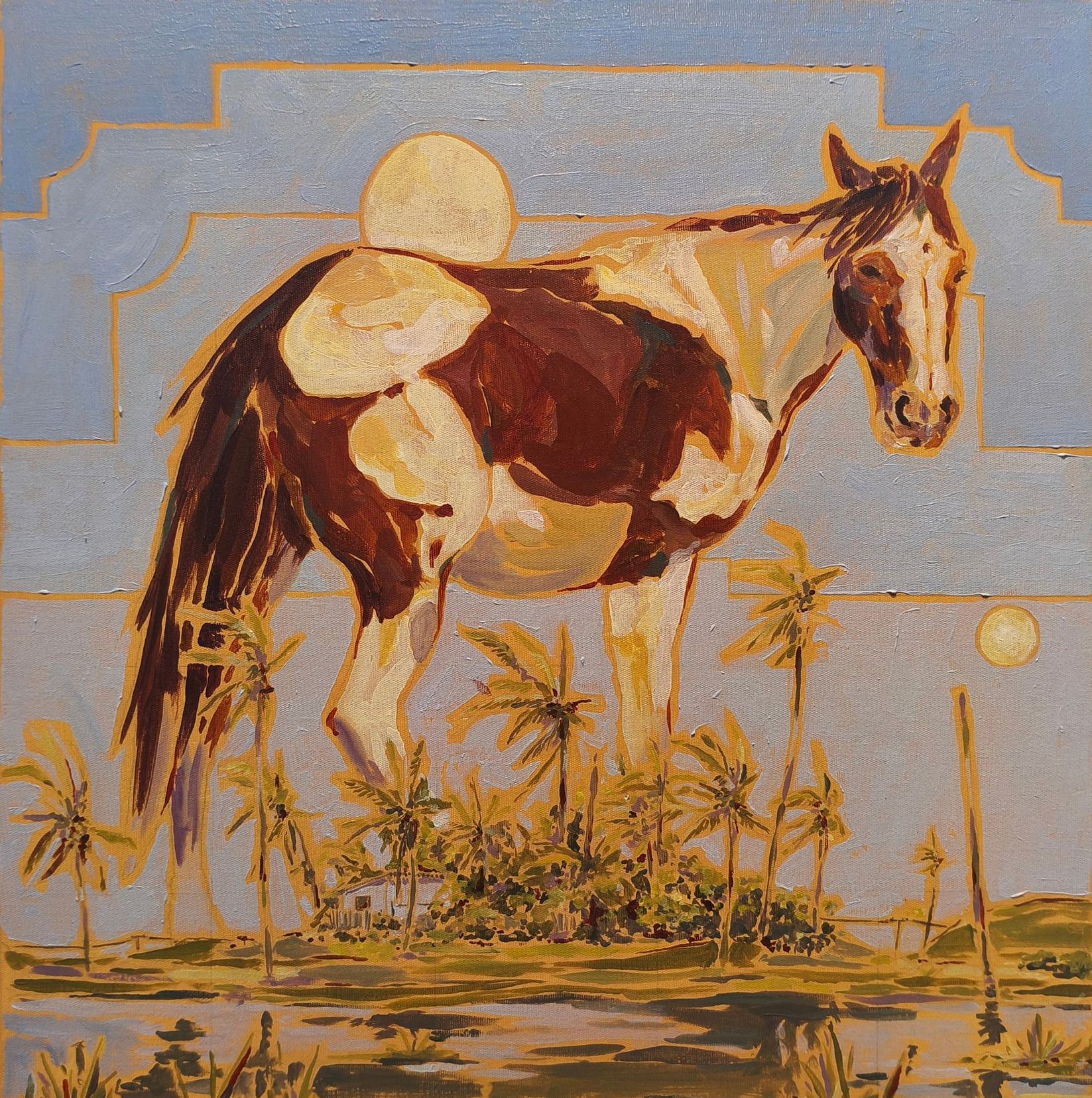
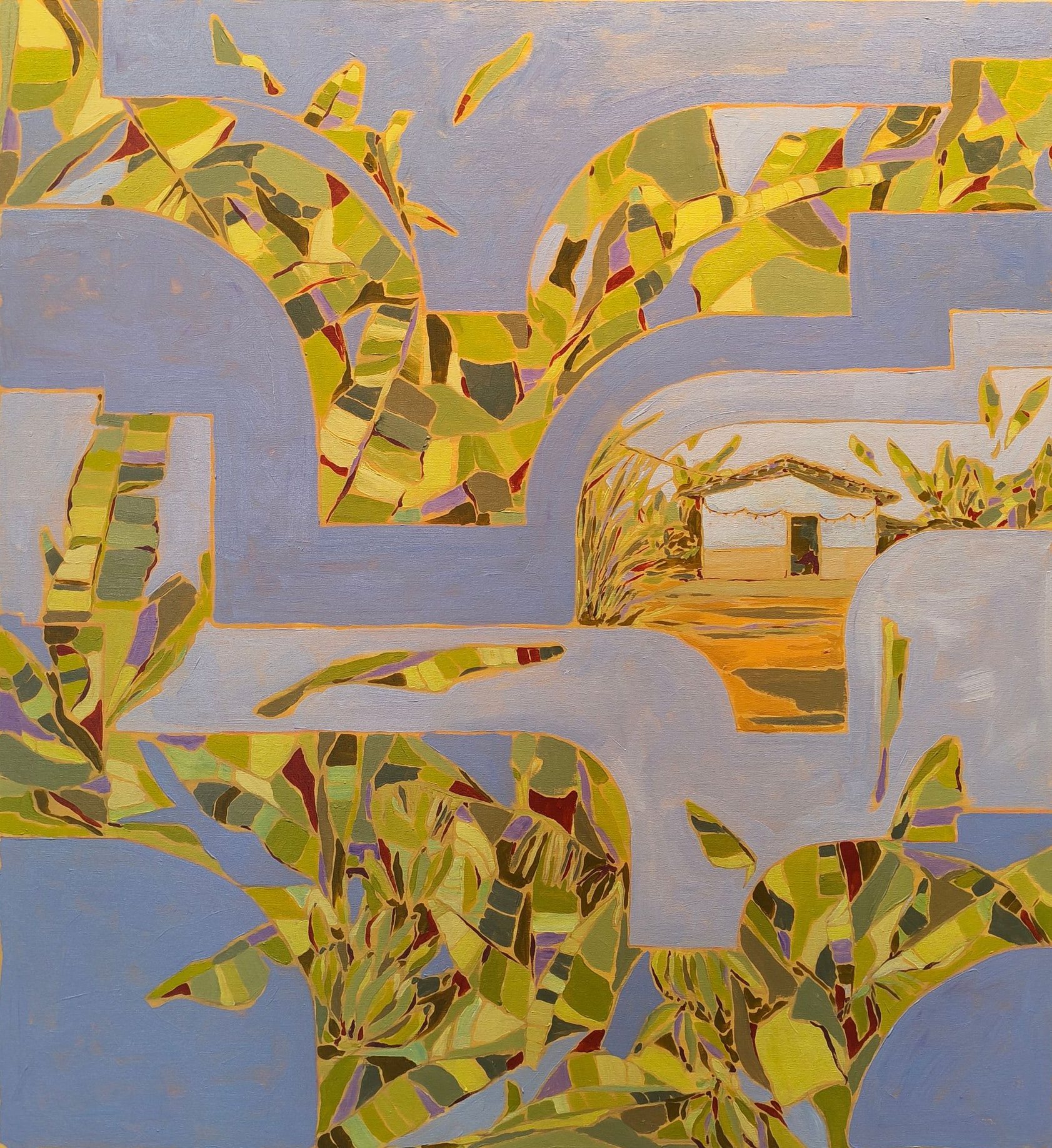
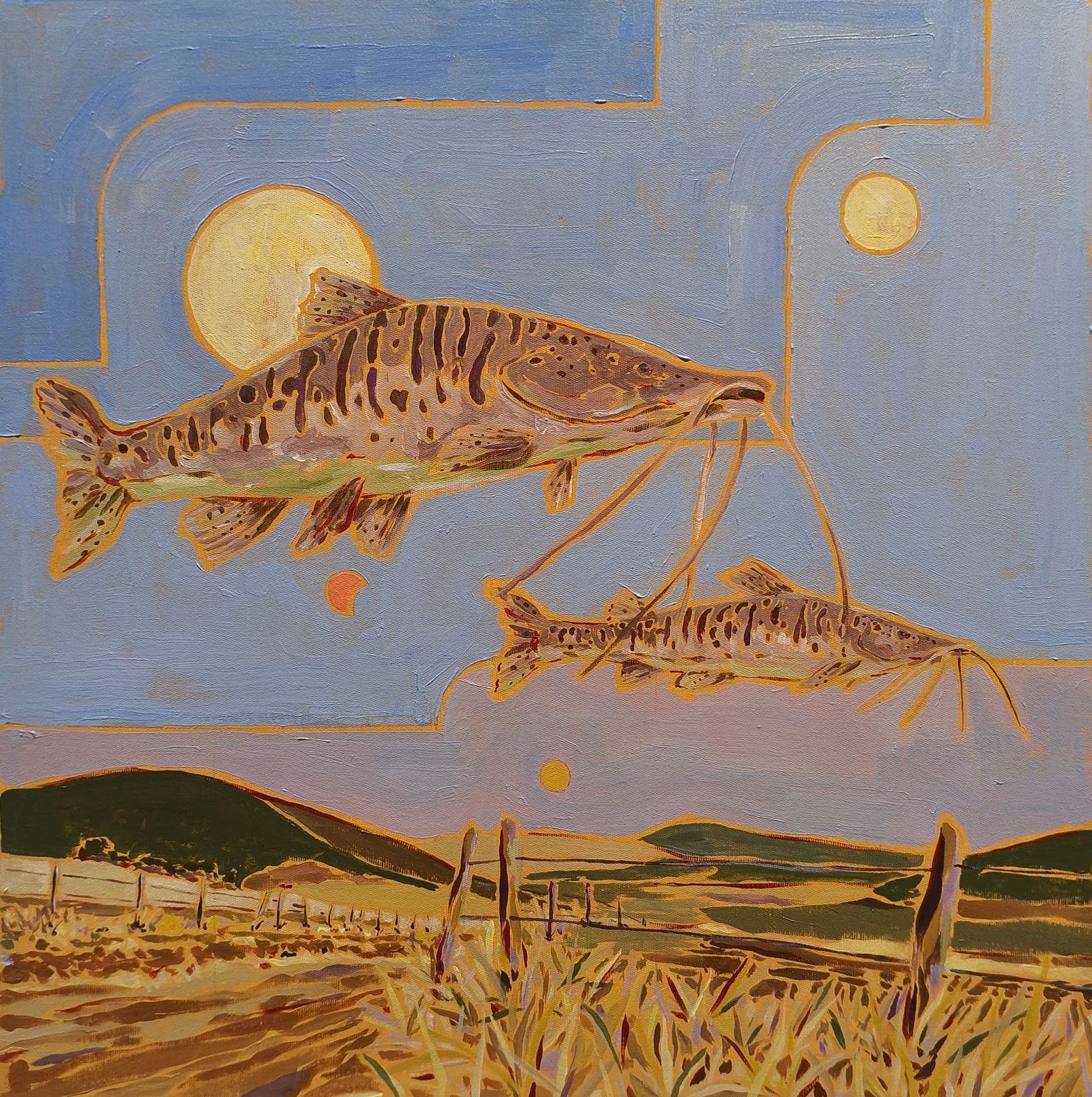
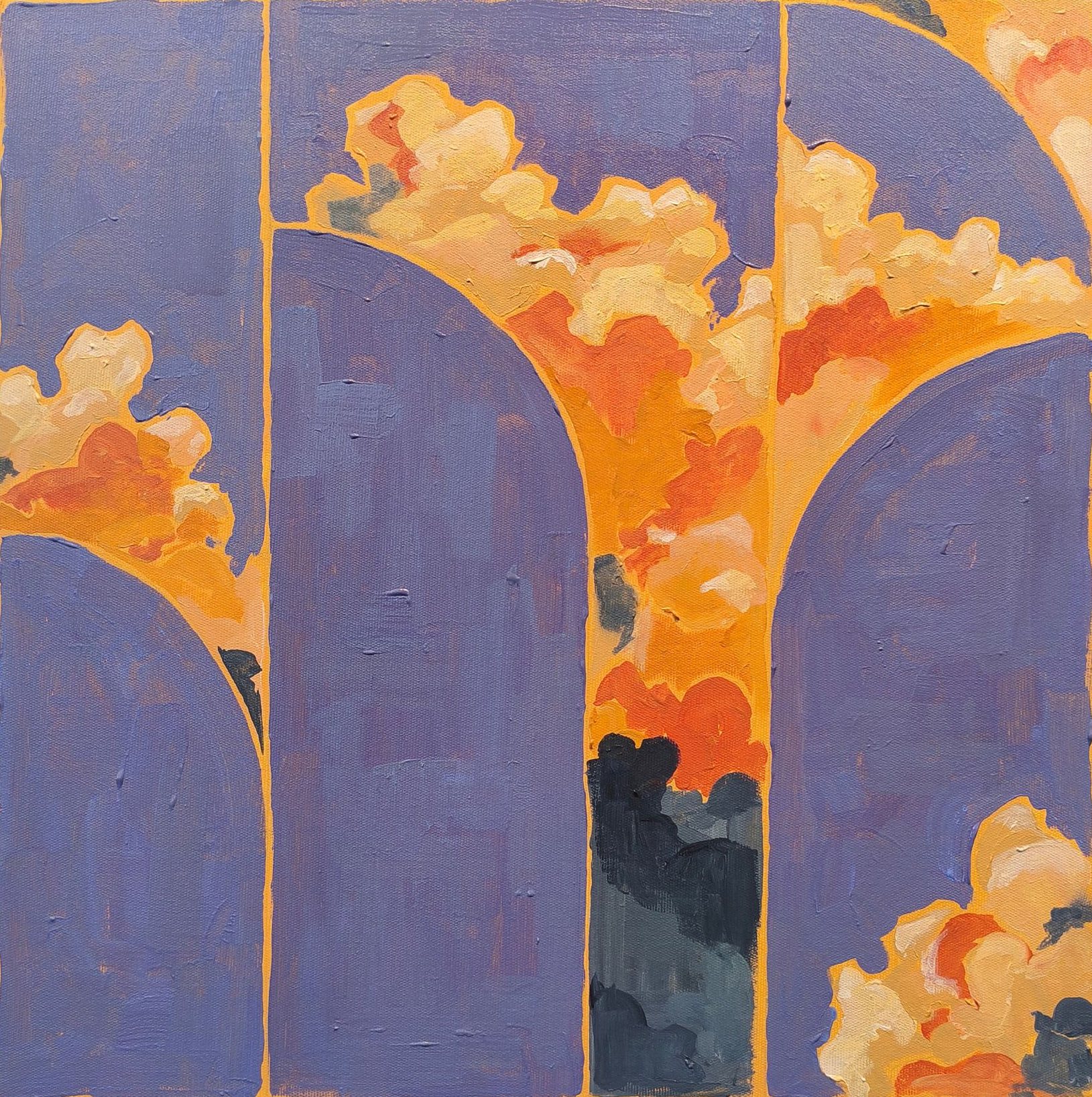
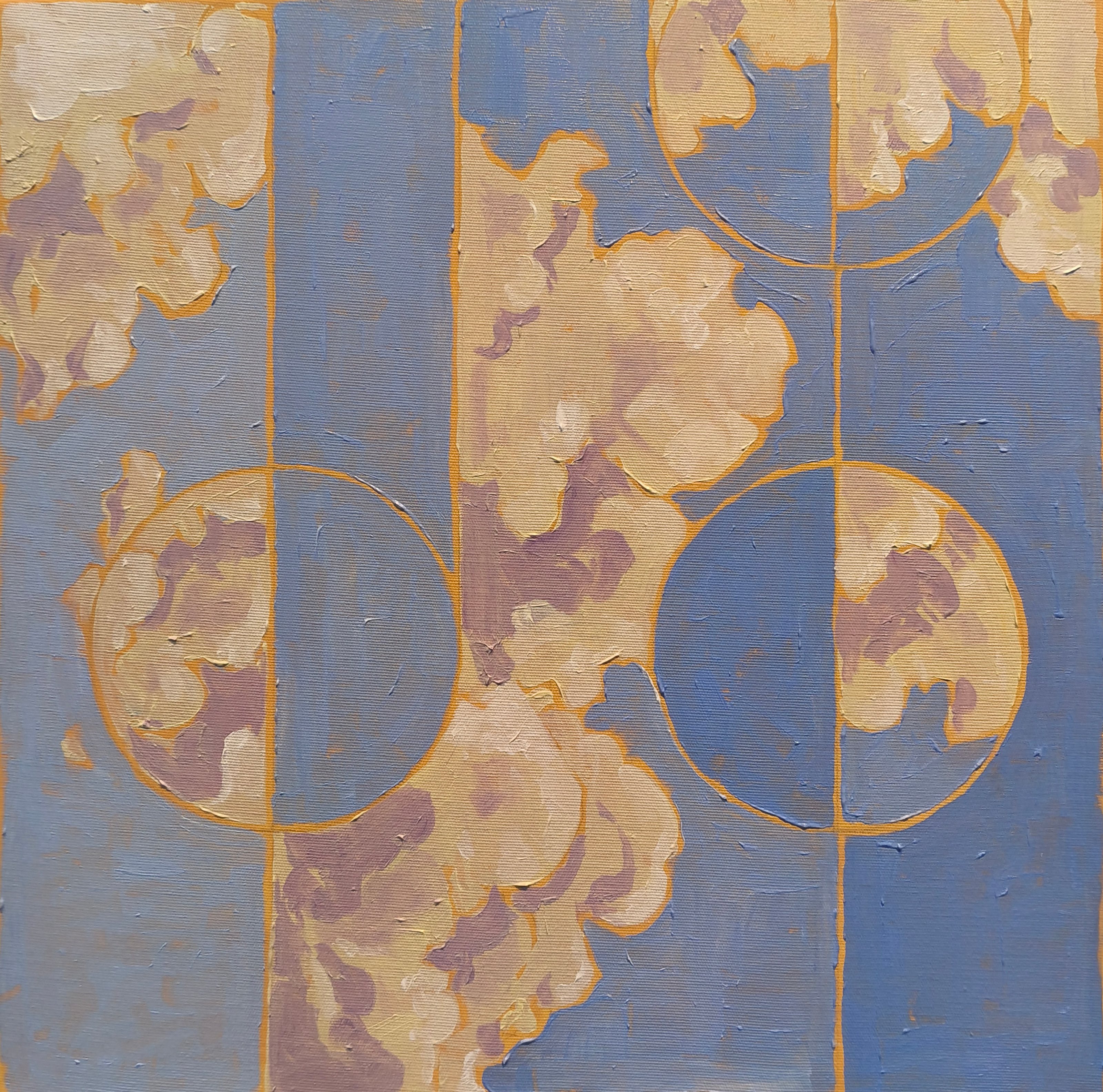
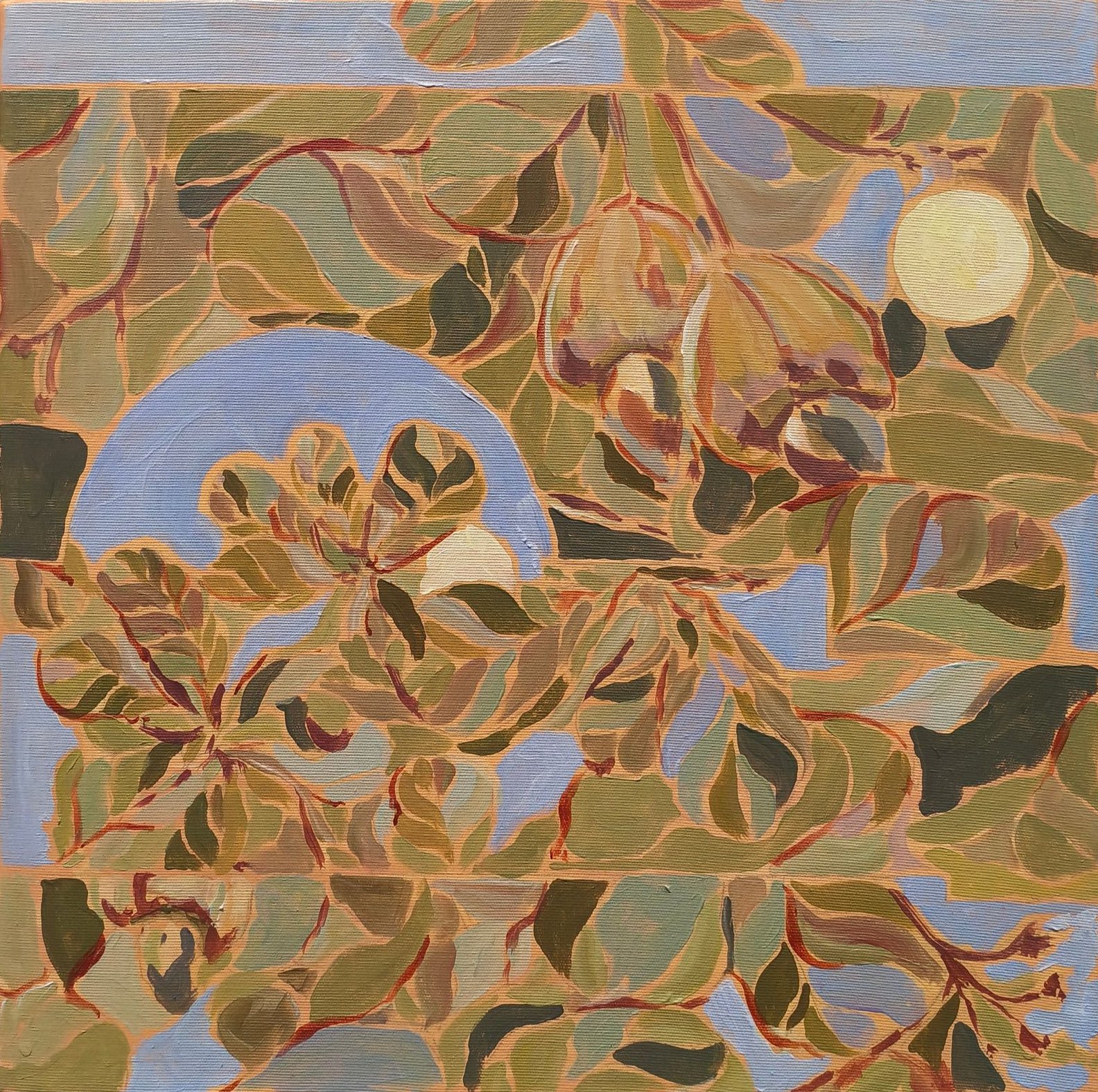
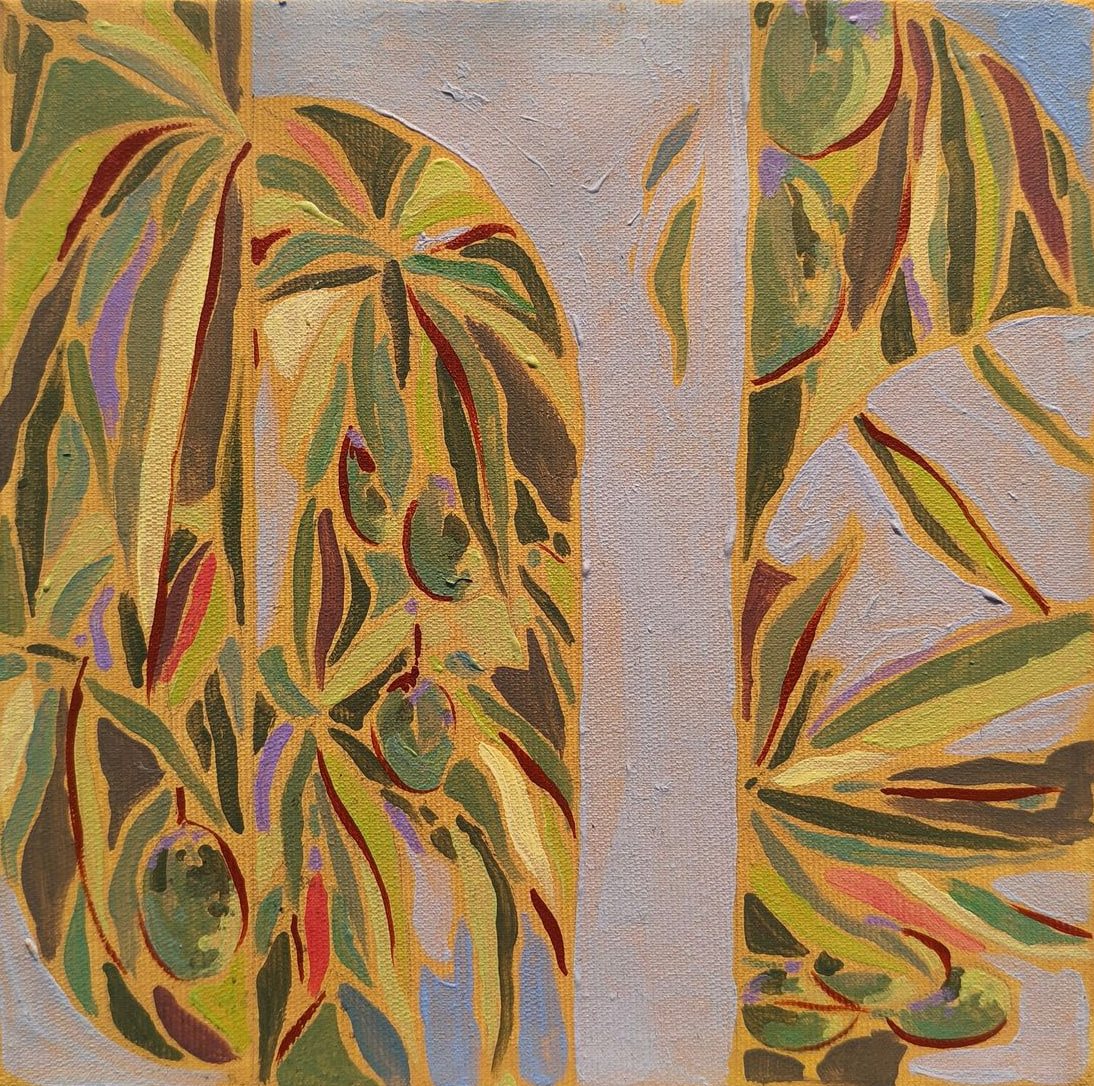
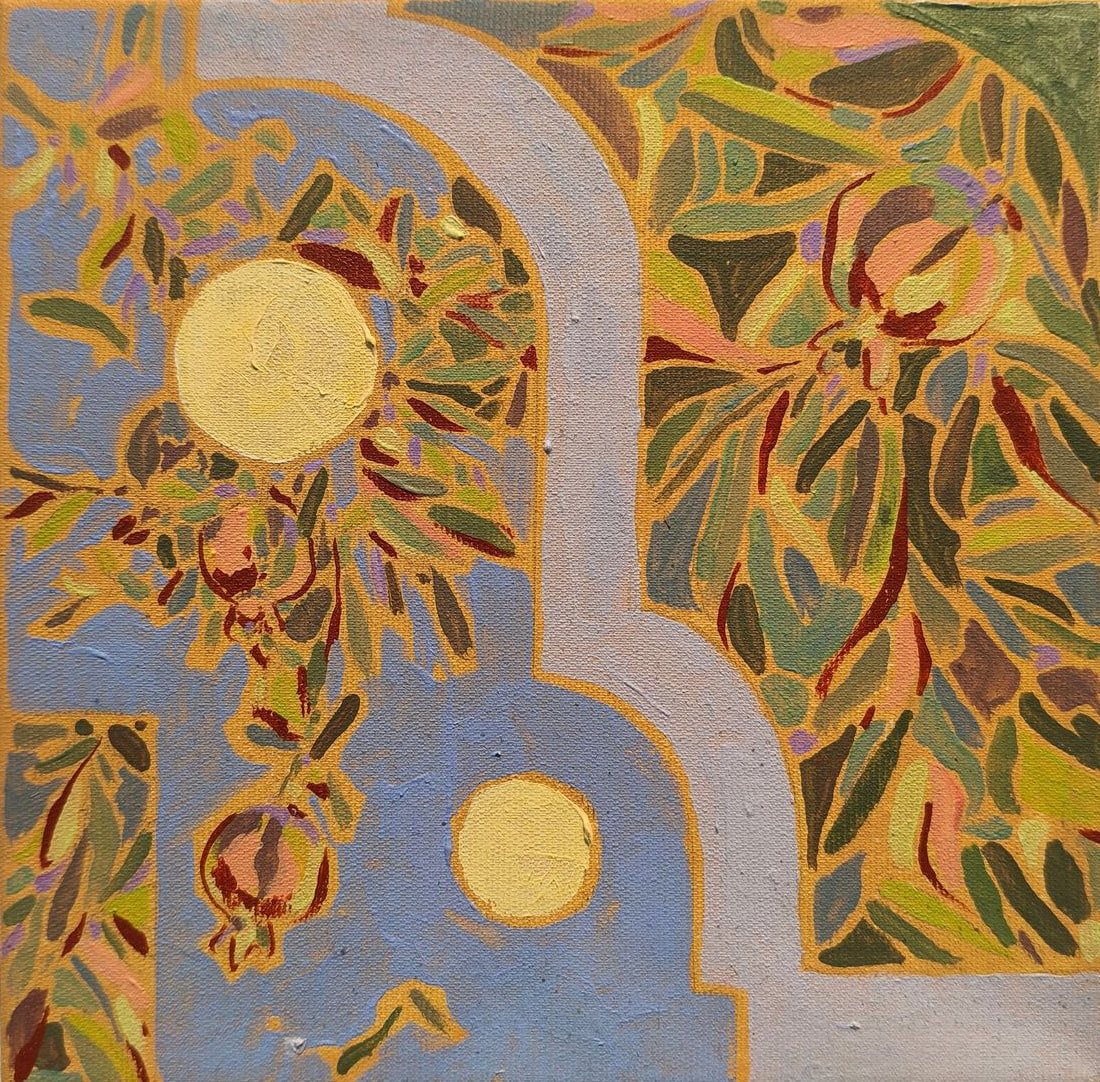
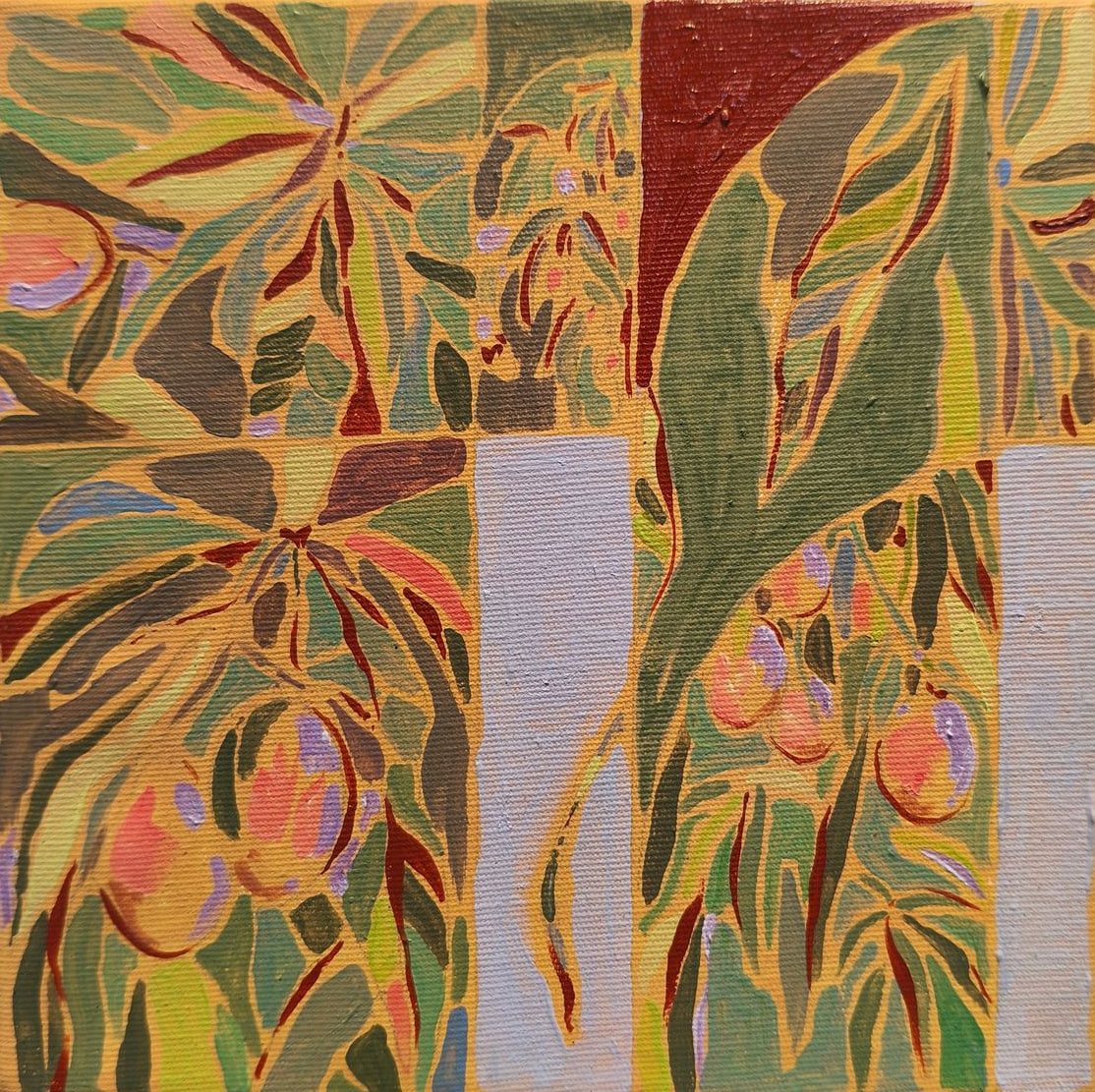
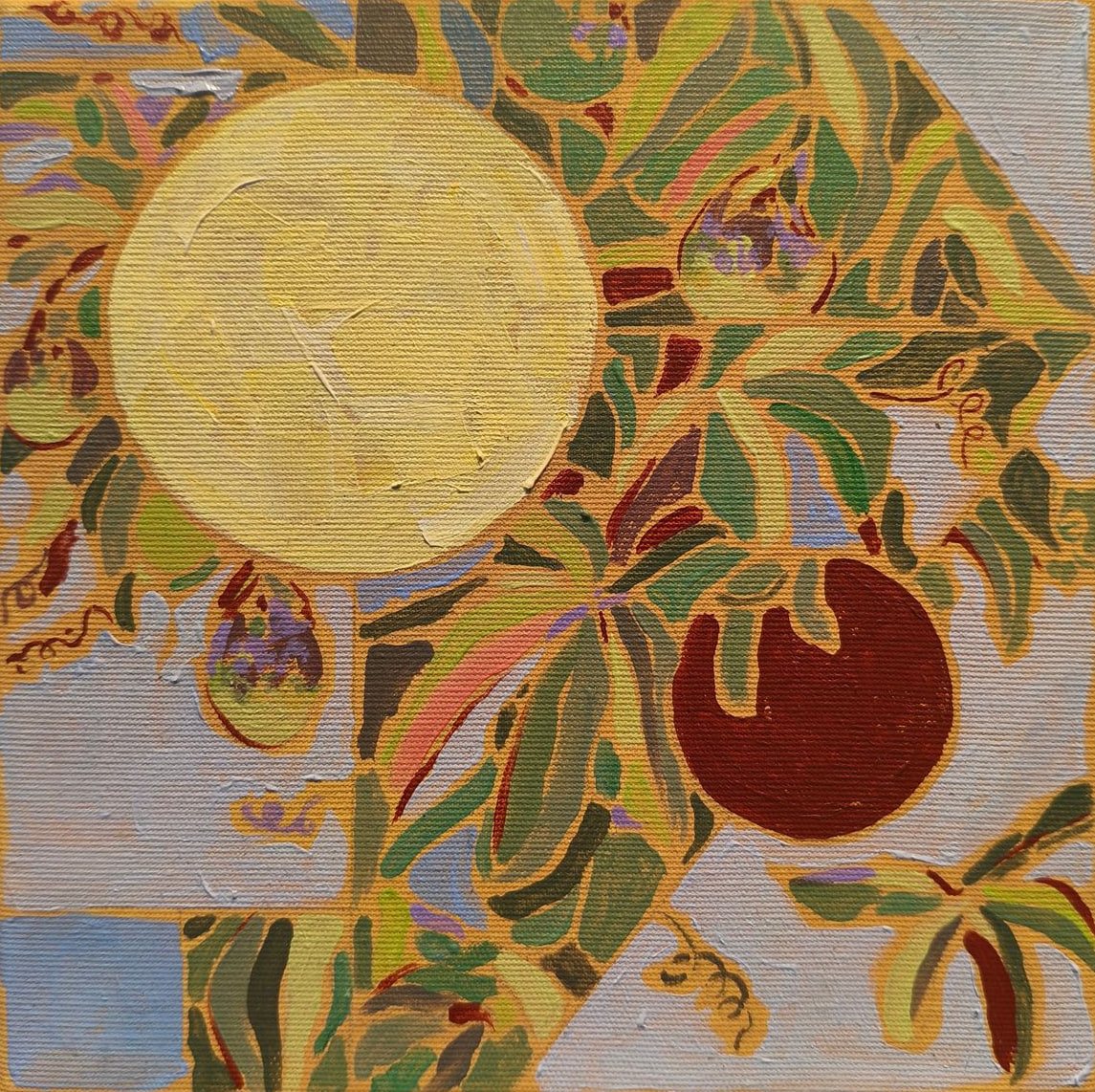
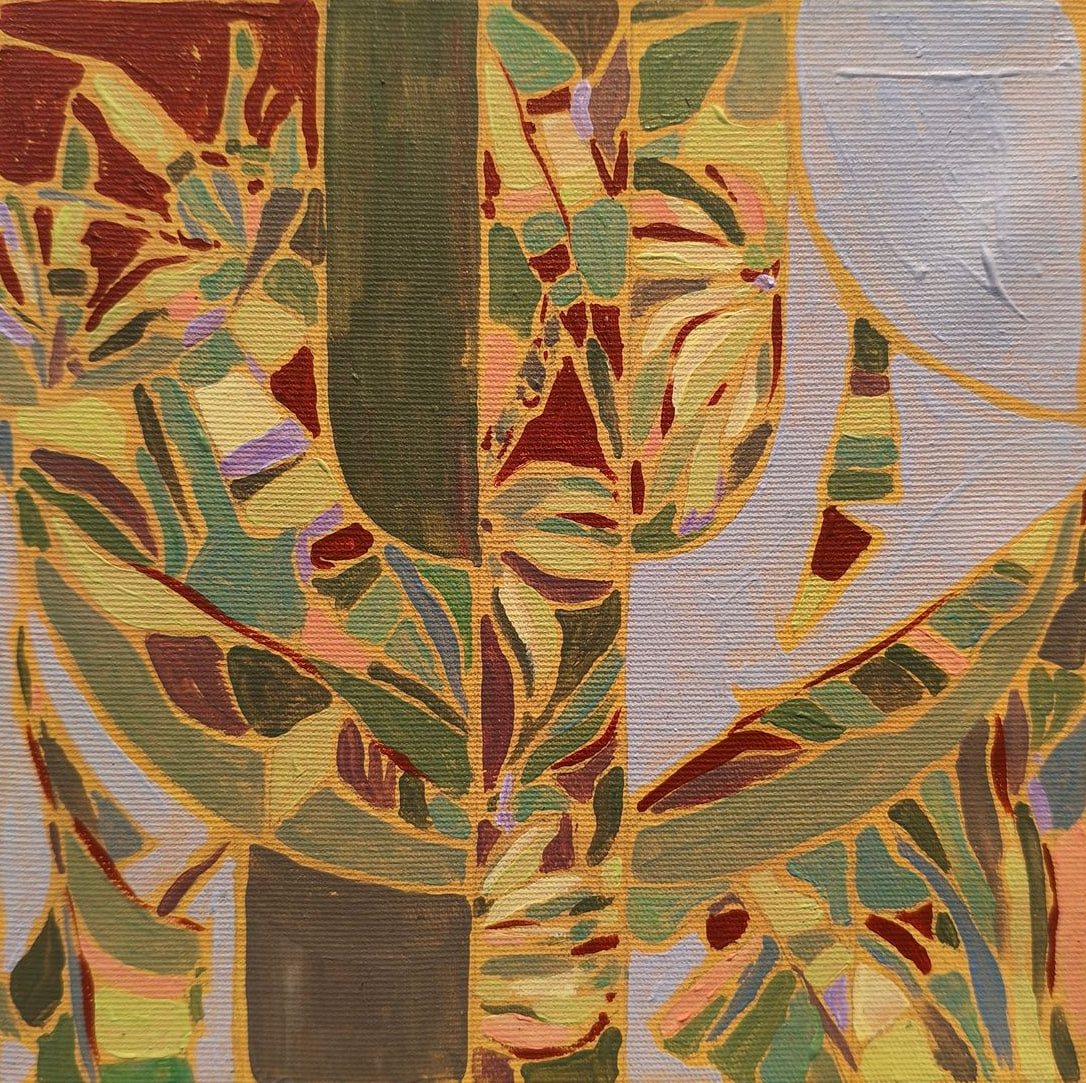
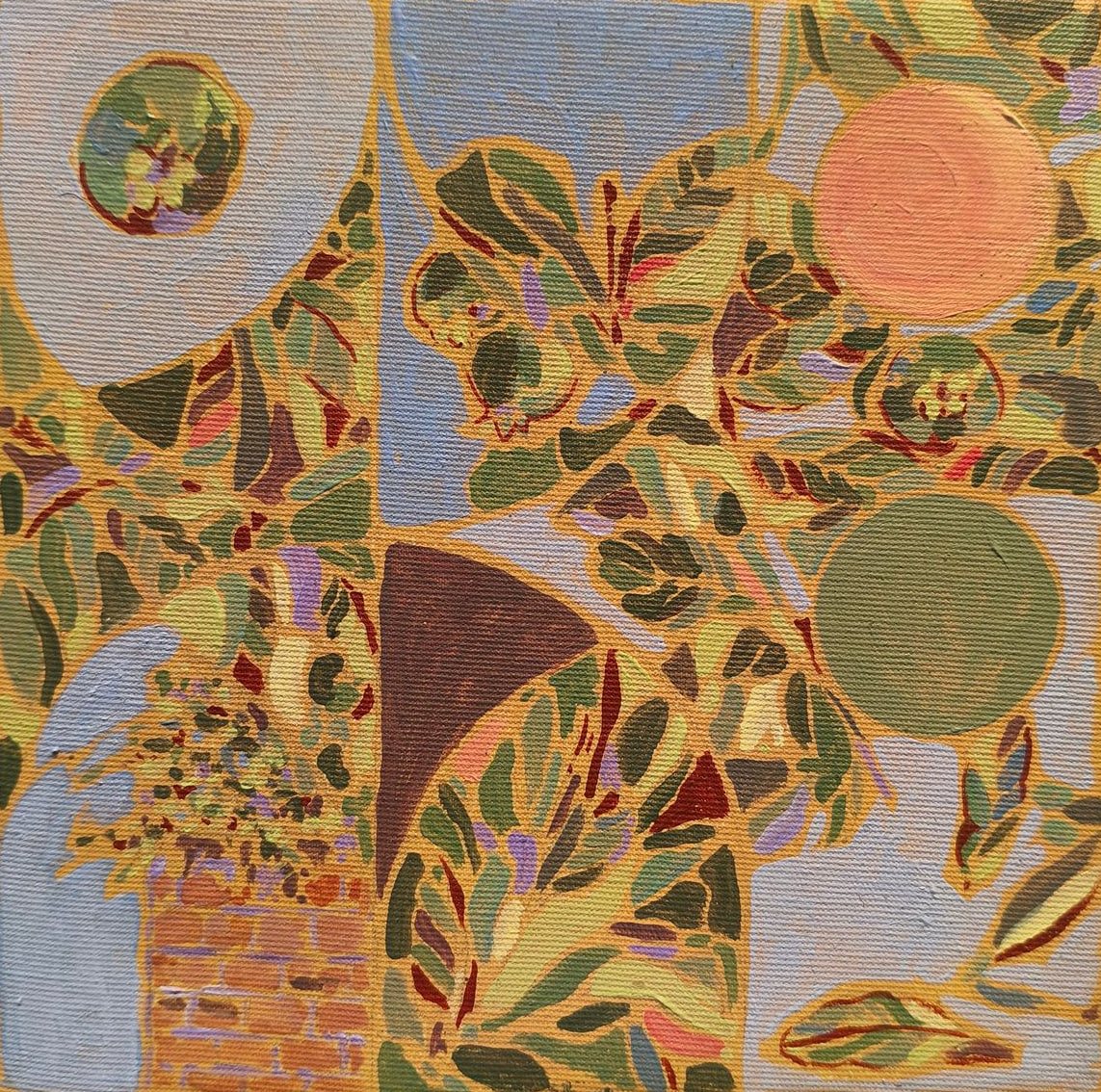
Spring arrives as the season of resurgence, of blooming again, of bringing in colour what the white and grey of autumn and winter could not carry. It is in this fissure, on this line, in this tropic that Paulo Paiva rests his artistic and creative process. Nature takes its place as protagonist amid the many crossings of an individual who moved from the countryside to the city. With the daring of those who create, the artist proposes a new perception of landscape, playing with the crooked, imprecise lines of the bush but also with firm strokes, straight lines and stepped patterns that recover the memory of his land, a land also marked by references to Art Déco.
As Caetano Veloso sang in “Trem das Cores”:
“A franja da encosta cor de laranja, capim rosa chá
O mel desses olhos luz, mel de cor ímpar
O ouro ainda não bem verde da serra, a prata do trem
A lua e a estrela, anel de turquesa”
(The orange fringe of the hillside, tea-rose grass / the honey of those eyes of light, honey of a singular colour / the not-yet-green gold of the mountains, the silver of the train / the moon and the star, a turquoise ring.)
It is in this palimpsest of colours that the artist from Goiás escapes, in a kind of anomie, against the grain of the norms, to propose a spring that is more than colourful: one with value and meaning, where the forces that come from the biome are brought to the foreground. We are biome; our bodies express it in gestures, speech and behaviour. In Paulo Paiva’s anatomy, however, it is revealed in animals, fruit and starry skies. It is in this “three-body problem” that chaos manifests itself as order, placing the artist’s experiences and meanings as the pillars of his creation, sinking into an interpretive field that goes beyond form and recalls the past.
The image is frozen, yet in motion within whoever looks at it, and it carries the hand of an artist who writes in shapes. It moves through us not as the final result of paint on canvas, but through the choices that turned the subconscious into image. Everything is potential, and it is in this setting that the artist reveals his bond with his land, his regard for what comes from within, and his search to see the future through what has already passed and passed through him. Paulo’s poetics is not restricted; it is broad and charged with meaning.
In Os sertões, Euclides da Cunha writes in detail about the land, the people and the struggle. Reading between the lines of Paiva’s works, one can grasp these elements of his origin: from the influence of nature, animals and fruit to the smaller-scale details of civilisation, like the footprints of humanity, along with the questions that can emerge from a region marked by disputes and interests.
The bud that remains is the desire for recognition of our origin: to mark the size of the land, to bring sound into silence. Spring lives in whoever accepts Paiva’s invitation to look at the environment not as an end but as a path towards a colourful, living and rich reality. In a contemporary world so steeped in the traits of monoculture, Paulo is in search of springs, an attempt to bring hope and a taste for what is ours, for what comes from within this fruit-bearing heart.
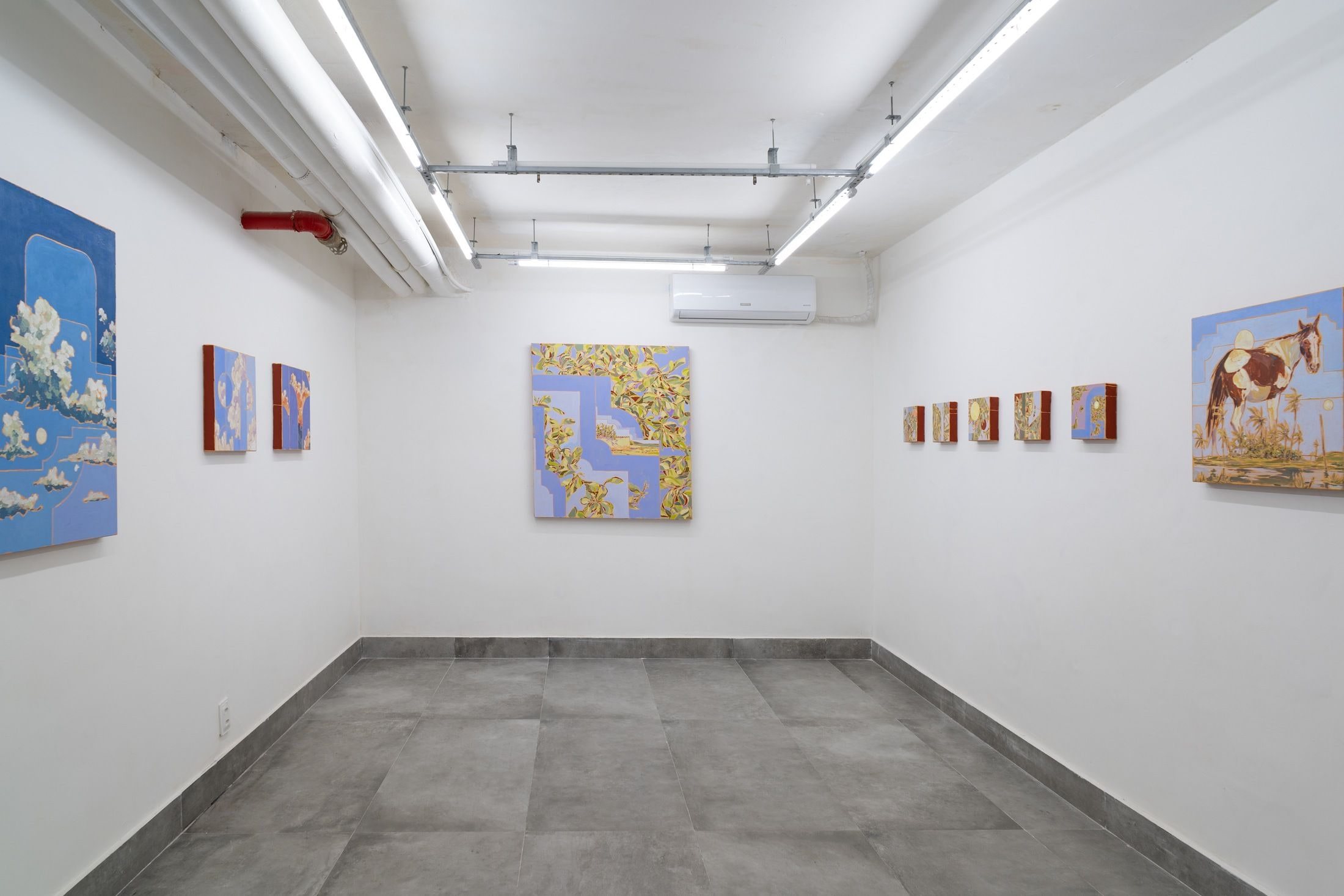
Installation views
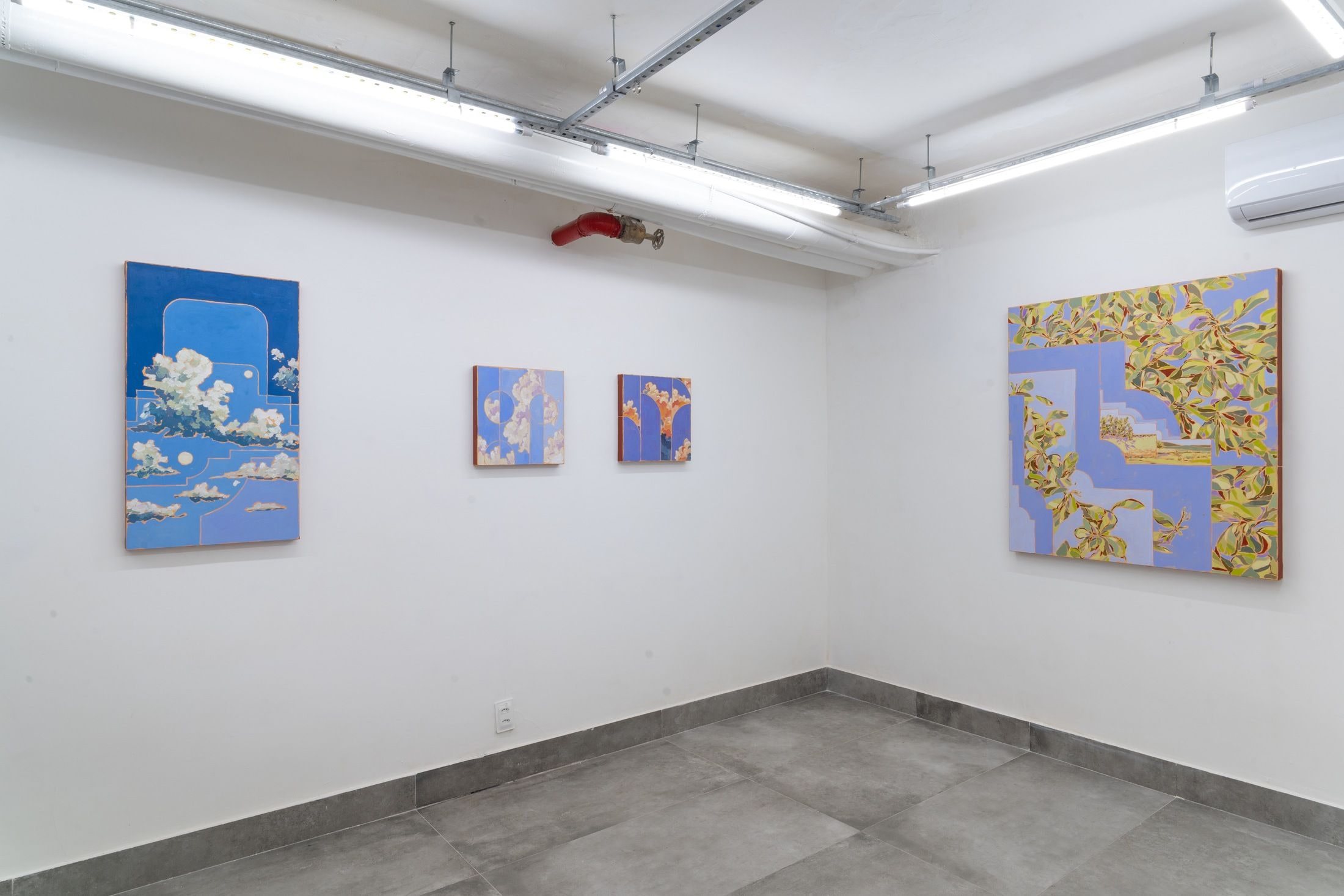
Paintings in the space 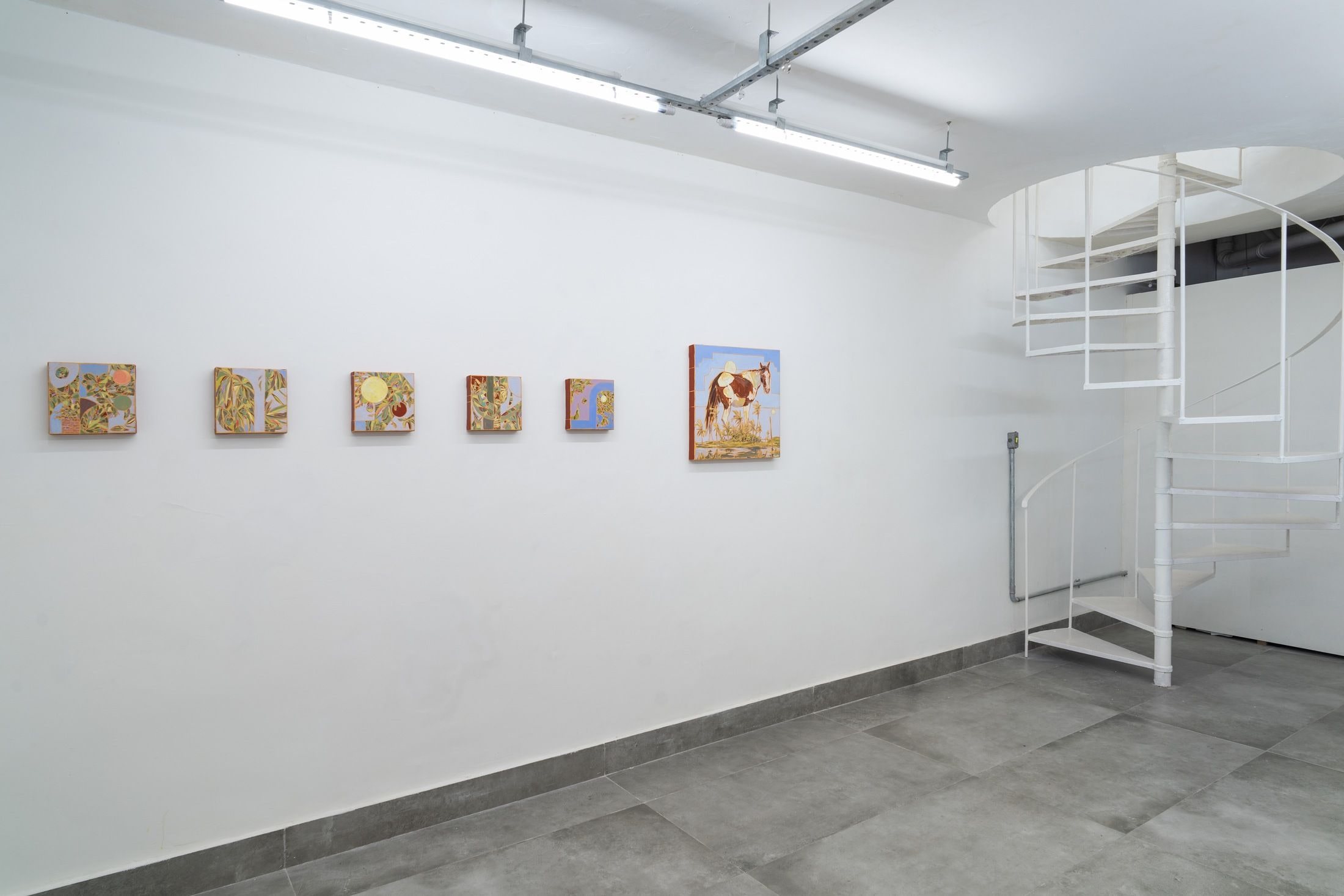
Variations in scale
Works in the exhibition